
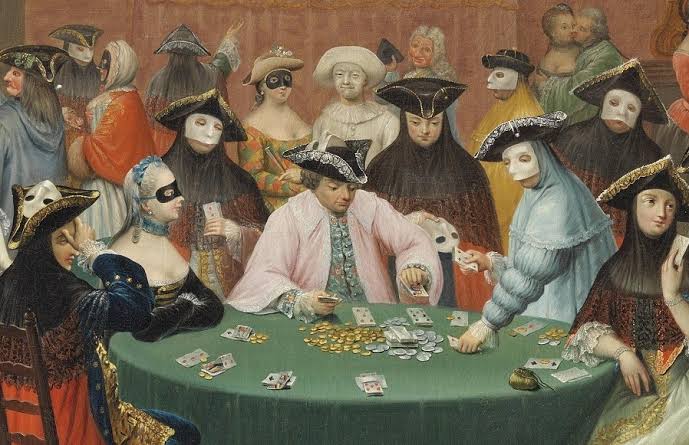
Games of chance may seem like a small part of ancient history, but they can reveal surprisingly useful details about how early societies functioned. Gaming objects found at archaeological sites, references in written records, and images of people playing games help researchers explore everyday entertainment, social relationships, religious beliefs, and attitudes toward risk.
Not every ancient game involved betting. Some were played for recreation, while others had ceremonial or symbolic meanings. Still, when evidence of wagering appears alongside these activities, it can provide insight into how people valued possessions, handled competition, and understood uncertain outcomes.
Ancient gambling practices were not identical across cultures. Their meaning depended on local customs, social structures, and laws. Examining these differences helps historians understand how games of chance fitted into the wider life of early communities.
Games Reveal How People Spent Their Leisure Time
Gaming objects demonstrate that people in many ancient societies made time for recreation. Boards, pieces, dice, and knucklebones could be used in homes, public spaces, or other gathering places.
Some games required planning and strategy, while others depended more heavily on chance. Both kinds of play created opportunities for people to compete, relax, and spend time together.
The location of gaming objects can provide clues about their social context. Objects found in domestic settings may suggest household recreation, while items discovered in burials or elite buildings can point to different cultural meanings. However, the location alone cannot prove exactly how an object was used.
Games therefore offer historians a glimpse into activities that formal records might otherwise overlook.
Gambling and Social Hierarchies
Ancient societies often had distinct social classes, and access to leisure activities could reflect those differences. Some gaming objects were made from simple materials, while others used expensive or carefully crafted materials that may have indicated status.
Where wagering occurred, the value of the stakes could also reveal differences in wealth. A small wager might have been manageable for one person but significant for another.
However, it is important not to assume that every game belonged exclusively to one social group. Similar games could be played in different settings, and the evidence does not always reveal who participated.
Studying gaming objects alongside household remains, written records, and other archaeological evidence can help researchers develop a more balanced understanding of social life.
The Connection Between Chance and Religious Beliefs
In some ancient cultures, people used lots, marked objects, or random outcomes in practices intended to interpret uncertainty or seek guidance. These activities could be associated with divination, religious ceremonies, or decisions believed to require supernatural insight.
Such practices should not automatically be classified as gambling. Divination and wagering can both involve chance, but they serve different purposes.
Their coexistence nevertheless shows that people sometimes used unpredictable outcomes to think about questions beyond ordinary entertainment. Luck and fate could be interpreted through religious, cultural, or philosophical ideas.
These beliefs varied widely. Some societies accepted particular chance-based rituals, while others placed restrictions on activities considered inappropriate or disruptive.
Trade, Craftsmanship, and Cultural Exchange
Gaming objects can also provide evidence about trade and craftsmanship. Materials used to make boards, pieces, or dice may have come from local sources or travelled through trade networks.
Similarities between games in different regions can suggest cultural contact, although shared features do not always prove direct borrowing. Games may change as they move between communities, and rules can be adapted to local preferences.
Portable objects were particularly suited to travel. Traders, travellers, soldiers, and migrants could carry games between places, introducing unfamiliar forms of recreation to new audiences.
The history of gaming therefore connects with broader patterns of movement, exchange, and cultural influence.
Gambling and the Development of Rules
Games need rules to determine how outcomes are decided. Where wagering is involved, participants also need some understanding of what counts as a valid result and what each person has agreed to risk.
This does not mean ancient games had the same formal contracts or dispute systems used by modern businesses. Rather, gaming illustrates how communities developed shared expectations for competition.
Disagreements could arise over outcomes, stakes, or claims of unfair play. Written accounts and legal traditions sometimes reveal concerns about gambling behaviour, though rules differed considerably between societies and periods.
The broader lesson is that games can reflect a community’s ideas about fairness, acceptable conduct, and the limits of individual behaviour.
Laws Reflect Public Attitudes Toward Gambling
Historical restrictions on gambling show that authorities did not always treat wagering as harmless recreation. Concerns could involve public order, financial disputes, religious values, or the behaviour of particular groups.
Rules also varied according to the occasion or type of activity. Some forms of play might be tolerated during festivals while attracting restrictions in other circumstances.
Legal rules should not be mistaken for a complete record of everyday behaviour. A prohibition does not prove that an activity disappeared, just as a lack of written restrictions does not prove universal acceptance.
Comparing legal records with archaeological and literary evidence gives historians a fuller picture of how gambling was practised and viewed.
Risk, Wealth, and Human Behaviour
Gambling provides a historical setting in which to examine how people responded to uncertainty. Players could choose whether to participate, what to stake, and how to interpret a win or loss.
It would be misleading to assume that ancient players thought about probability in the same way modern statisticians do. Nevertheless, games of chance created situations in which outcomes could not be controlled completely by skill.
The stakes could be social as well as material. Winning might bring prestige, while losing could cause embarrassment or conflict.
These patterns are not unique to the ancient world. They illustrate enduring questions about risk, competition, and how people respond to unpredictable results.
Why Archaeologists Must Interpret Evidence Carefully
A gaming piece can have several possible uses. An object resembling a die might have served in a game, a ritual, or another activity. A board may have been used for a game that did not involve money.
Researchers therefore consider context, wear patterns, inscriptions, comparisons with known objects, and written descriptions. Conclusions become stronger when several kinds of evidence support the same interpretation.
This caution matters because popular accounts sometimes describe every ancient gaming object as proof of organised gambling. In reality, the evidence often reveals gaming more clearly than it reveals the presence or size of wagers.
Conclusion
Ancient gambling practices can reveal how early societies approached leisure, status, religion, trade, rules, and risk. Gaming objects and historical accounts provide clues about daily life that are not always visible in records focused on rulers, wars, or major political events.
The evidence must be interpreted carefully because games of chance did not always involve betting. Taken together, however, these practices show that games were meaningful social activities and that attitudes toward luck and wagering varied across cultures.
FAQs
What can ancient gaming objects tell historians?
They can provide clues about recreation, craftsmanship, trade, social settings, and cultural beliefs. Their exact use must be assessed in archaeological context.
Did all ancient games involve gambling?
No. Many were recreational, strategic, or ceremonial. The presence of chance does not prove that players wagered money or valuables.
Why did some ancient societies restrict gambling?
Reasons varied but could include concerns about public order, financial disputes, social behaviour, or religious and cultural expectations.
How did gambling spread between ancient societies?
Trade, travel, migration, and contact between communities helped games and gaming practices move across regions. Similarities alone do not always establish direct cultural influence.
One thought on “What Do Ancient Gambling Practices Reveal About Early Societies?”