
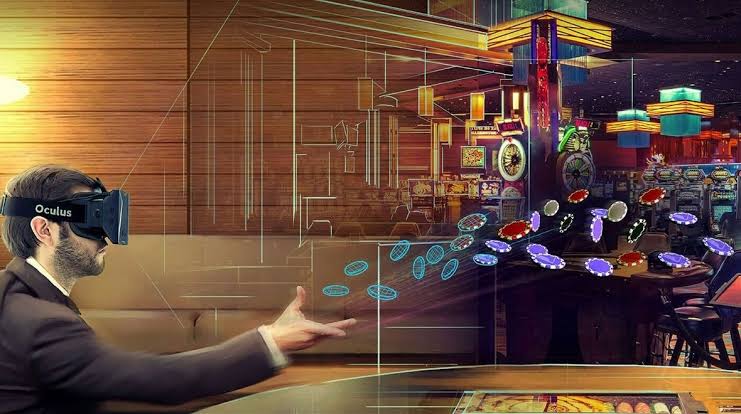
Online casinos have traditionally presented games through flat screens, menus, and digital interfaces. Virtual reality, or VR, offers a different possibility: an environment users can explore in three dimensions, with the feeling of being present inside a digital space.
Instead of simply viewing a roulette table on a phone or computer, a VR user might enter a virtual casino room, look around, interact with objects, and communicate with other avatars. Although the technology has limitations, it could influence how some online gambling experiences are designed in the future.
What Is Virtual Reality?
Virtual reality uses computer-generated environments to create an immersive experience. Users commonly access VR through a headset that tracks head movement and displays a three-dimensional scene. Some systems also support hand controllers or other forms of interaction.
VR differs from ordinary online gaming because it places the user inside a simulated environment rather than presenting everything through a conventional screen. The degree of immersion depends on the hardware, software, tracking quality, and interface design.
Not every virtual environment requires a headset. Some platforms offer simplified three-dimensional spaces on standard devices, although these may not provide the same immersive experience.
Virtual Casino Floors and Gaming Rooms
One potential application is a virtual casino floor where users can move between digital rooms and approach different gaming tables.
A platform might offer several environments, such as a modern resort, a classic gaming room, or a themed entertainment space. Users could navigate the environment instead of moving through a list of game titles.
The design challenge is to make these spaces useful rather than merely decorative. Important information, including rules, betting limits, account settings, and support options, must remain easy to find.
More Immersive Table Games
VR could allow users to view virtual tables from different angles and interact with digital objects using controllers or hand-tracking technology. A blackjack table, for example, might display cards and chips within a three-dimensional environment.
However, realistic visuals do not automatically make a game more accurate, fair, or secure. The underlying software still determines the game mechanics, while any claims about fairness require appropriate verification and oversight.
Interfaces should also make actions clear. Users need to know when they are selecting an option, confirming a wager, or interacting with a non-financial object.
Social Interaction With Other Players
Traditional online gambling often feels solitary, even when other users are participating in the same game. VR could introduce a stronger sense of shared presence through avatars, voice communication, and virtual spaces.
Players might be able to greet one another, talk at a table, or participate in a hosted digital environment. Such features could make the experience feel more social.
They also introduce moderation challenges. Platforms would need ways to manage harassment, unwanted contact, offensive behaviour, impersonation, and privacy concerns. Users should have clear controls for muting, blocking, reporting, and limiting interactions.
Live Dealers in Virtual Environments
VR could also be combined with live dealer video. A platform might place a live video feed within a virtual room, giving the user the impression of approaching a table where a real dealer is operating.
The technical challenge is significant. Developers must coordinate video, game data, user actions, and the virtual environment while maintaining a clear view of important information.
Network delays, tracking errors, or unclear controls can make the experience frustrating. Operators would need to explain how interrupted sessions and disputed actions are handled.
Hardware and Accessibility Barriers
VR requires compatible equipment, and some users may find headsets uncomfortable or expensive. Others may experience motion sickness, eye strain, or difficulty using hand controllers.
A VR casino should therefore offer accessible alternatives where possible. Important account features should not depend exclusively on a headset, and users should be able to adjust comfort settings or leave an immersive environment easily.
Developers should also consider people with limited mobility, visual impairments, hearing differences, or other accessibility needs.
The Risk of Greater Immersion
Immersive design can make a virtual environment feel more vivid and engaging. That may be appealing for entertainment, but it can also make it harder for some users to recognise how much time has passed or how much money they have spent.
A virtual casino should not hide financial information behind decorative interfaces or use visual effects to pressure people into making additional bets.
Useful safeguards include persistent account balances, clear wager confirmations, session reminders, accessible spending limits, cooling-off tools, and easy exit controls.
VR should not be designed to make gambling feel consequence-free simply because the surroundings are simulated.
Privacy in Virtual Reality
VR systems may collect information about head movement, hand movement, voice, device usage, and interactions within an environment. Depending on the hardware and software, some of this information may be sensitive.
Operators should collect only what is necessary, explain how information is used, and protect it appropriately. Users should be able to understand the privacy implications before joining a virtual environment.
Social features also require care. A virtual avatar does not guarantee anonymity, particularly when an account is linked to identity checks or payment information.
What the Future May Hold
As VR hardware and software improve, virtual casino environments may become more realistic, accessible, and responsive. Some platforms may combine VR with conventional web interfaces, allowing users to choose the format that suits them.
The future will depend on more than visual quality. Usability, affordability, security, regulation, and responsible design will determine whether these experiences become practical for a wider audience.
Conclusion
Virtual reality could transform some online casino experiences by creating immersive gaming rooms, more interactive tables, and new forms of social participation. Yet VR also introduces barriers involving cost, comfort, accessibility, privacy, and responsible gambling. A convincing virtual environment does not guarantee a fair game or a trustworthy operator. If VR becomes more common in gambling, its success should depend on clear interfaces, strong safeguards, and genuine user control rather than immersion alone.
FAQs
1. What is a virtual reality casino?
It is a digital environment that uses VR technology to let users explore simulated casino spaces and, where offered legally, interact with virtual games.
2. Will VR replace traditional online casinos?
That is uncertain. VR may become an alternative format, but cost, comfort, accessibility, and user preferences may limit its adoption.
3. Can VR make casino games fairer?
No. Immersion changes how users experience a game, not the underlying requirements for fair game design and verification.
4. What equipment is needed for a VR casino?
Typically, a compatible headset and supporting hardware are required, although some three-dimensional platforms offer less immersive alternatives.
5. What safety concerns come with VR gambling?
Concerns include excessive immersion, reduced awareness of time and spending, privacy risks, harassment, and accessibility barriers.



One thought on “How Virtual Reality Could Transform Online Casino Experiences?”