
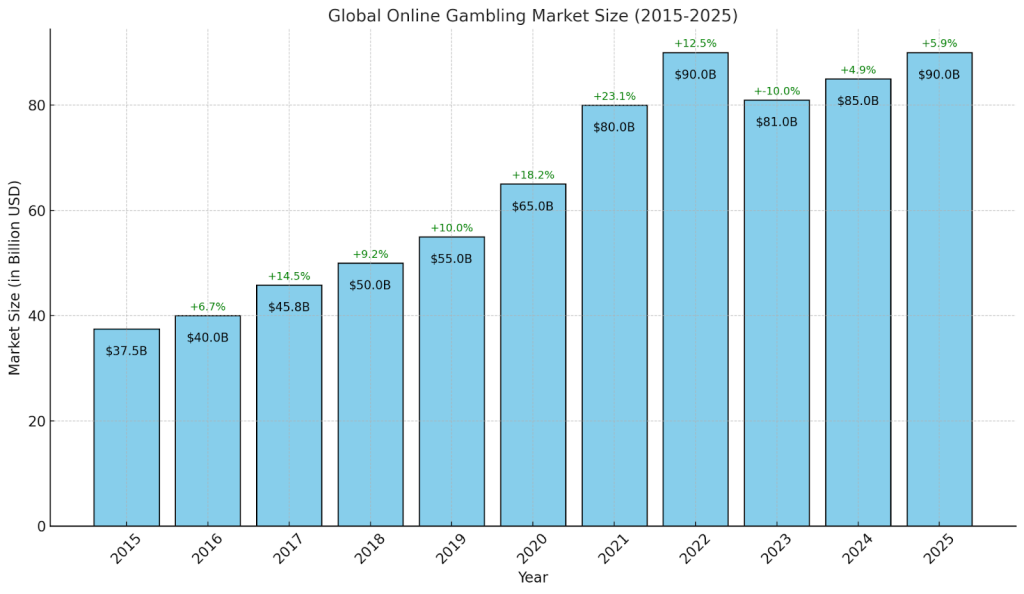
Casino industry growth in emerging markets often reflects several changes happening at once. Governments may revise gambling laws, tourism may expand, investors may fund new resorts, and consumers may gain access to more entertainment options. Technology can also change how gambling products are delivered, although online and land-based casino activities may be subject to different legal rules.
Growth is not simply a matter of opening more casinos. A market needs clear regulations, sufficient demand, capable operators, reliable infrastructure, and systems to protect customers. Without these foundations, rapid expansion can create financial, legal, and social problems.
Understanding the main drivers of growth helps explain why some emerging markets attract sustained investment while others struggle to move beyond proposals and announcements.
Regulatory Reform and Legal Certainty
Regulatory reform is often one of the most important factors in market development. When a government establishes a clear licensing system, businesses can assess the legal requirements and decide whether to invest.
A framework may define who can apply for a licence, how operators are assessed, which games are permitted, and how revenue is taxed. It can also establish requirements for financial reporting, anti-money-laundering controls, technical standards, and responsible gambling.
Legal certainty does not necessarily mean that rules are permissive. A tightly regulated market can still attract responsible investment if the requirements are transparent and consistently enforced.
By contrast, unclear laws and unpredictable decisions can discourage long-term projects. Investors may hesitate when they cannot determine whether their proposed operations will be permitted or how future changes could affect their business.
Tourism and Hospitality Development
Tourism can support casino industry growth by bringing visitors who spend money on accommodation, dining, events, shopping, and entertainment. Integrated resorts may benefit when they form part of a wider destination with reliable transport and multiple attractions.
New airports, hotels, conference centres, and transport links can make previously difficult-to-reach areas more accessible. These developments may improve the commercial case for a casino resort.
However, tourism growth should be measured carefully. A rise in visitor numbers does not prove that demand for casino services will increase at the same rate. Visitors have different interests, budgets, and legal eligibility, and some destinations may attract travellers who have little interest in gambling.
Domestic Demand and Disposable Income
Local demand can influence whether a casino market is commercially viable. Operators may examine population size, income distribution, employment, urbanisation, and the range of existing leisure activities.
But broad economic indicators must be interpreted cautiously. A large population does not automatically mean that a large proportion of residents can legally or comfortably afford casino entertainment.
Authorities also need to consider potential harm to household finances. Growth strategies that depend on excessive gambling by vulnerable customers are not a sound basis for a sustainable industry.
Responsible development should be accompanied by clear customer information, appropriate safeguards, accessible support, and monitoring of gambling-related harm.
Foreign and Domestic Investment
Casino projects often require substantial capital. Funding may come from domestic businesses, international hospitality groups, property developers, investment partners, or financial institutions.
Investment can support construction, technology, staff training, security, and the development of surrounding facilities. It may also create opportunities for local contractors and suppliers.
Yet investment announcements need to be distinguished from completed projects. A proposed resort may face financing problems, planning delays, legal challenges, or changes in market conditions.
Reliable indicators of growth include completed construction, issued operating licences, actual openings, verified employment, and ongoing business activity.
Technology and Digital Access
Technology can influence the development of both physical casinos and legally authorised online gambling services. Land-based operators may use digital systems for payments, security, customer support, and facility management.
In markets where online gambling is legal, operators may also use mobile interfaces and digital payment methods to reach customers. However, the legality of online casino gambling must be assessed separately from the legality of physical casinos or other betting products.
Technology creates compliance challenges as well as commercial opportunities. Operators need secure systems, privacy protections, effective identity checks, and controls that meet local regulatory requirements.
Digital access should not be confused with legal permission. A website being accessible from a country does not necessarily mean its services are authorised there.
Infrastructure and Workforce Development
Sustained growth depends on practical operating conditions. Resorts need electricity, water, telecommunications, transport, security, and reliable public services. They also need workers with skills in hospitality, finance, maintenance, technology, and compliance.
Workforce development can support local participation. Training programmes and partnerships with educational institutions may help residents qualify for specialist roles.
If the required skills are scarce, operators may face higher recruitment costs or rely heavily on staff from other markets. This can affect project timelines and the share of economic benefits reaching local communities.
Infrastructure and workforce planning should therefore be part of the initial investment assessment, not an afterthought.
Tax Policy and Government Revenue
Governments may view regulated casino activity as a potential source of tax revenue, licence fees, and investment. Tax policy can influence whether operators consider a market financially feasible.
However, taxes must be assessed alongside construction costs, compliance obligations, labour expenses, and market demand. A low tax rate cannot compensate for every commercial weakness.
Public authorities also need to consider the costs of regulation, enforcement, treatment services, and other measures related to gambling harm. Gross casino revenue and tax receipts alone do not reveal the full public benefit.
Transparent reporting helps governments and communities evaluate whether a market is delivering the outcomes promised when legislation was introduced.
Competition and Market Maturity
An emerging market may attract several operators if licensing rules permit competition. This can encourage service improvements, investment in facilities, and a wider range of entertainment experiences.
Too much capacity relative to demand, however, can create financial pressure. Companies may compete aggressively for a limited customer base, while smaller operators struggle to cover fixed costs.
Market maturity involves more than the number of properties. It includes reliable regulation, established operating standards, informed customers, competent staff, and a competitive environment that does not reward irresponsible practices.
Social Acceptance and Public Trust
Public attitudes can influence whether casino expansion proceeds. Communities may welcome employment and tourism investment while expressing concerns about addiction, crime, traffic, or changes to local neighbourhoods.
Transparent consultation can help governments identify these concerns and assess potential impacts before approving major developments. Public trust is also affected by how regulators respond to complaints and whether operators meet their obligations.
A market’s long-term credibility depends on more than commercial growth. It also depends on whether people believe that the industry is governed fairly and that safeguards are effective.
Conclusion
Casino industry growth in emerging markets is driven by regulatory reform, tourism, customer demand, investment, infrastructure, technology, and workforce development. Tax policy, competition, and public acceptance also shape the pace and sustainability of expansion.
No single factor guarantees success. Markets are more likely to develop responsibly when investment is supported by clear laws, realistic forecasts, independent oversight, and meaningful protections for customers and communities.
FAQs
What is the main driver of casino industry growth?
There is no universal driver. Legal clarity, tourism demand, investment, infrastructure, and consumer demand often work together to influence market development.
Does tourism growth always increase casino revenue?
No. Tourists have different preferences and budgets, and not every visitor is legally eligible or interested in gambling.
How does regulation affect emerging casino markets?
Regulation defines which activities are permitted, who can operate, and what standards must be followed. Clear and enforceable rules can make a market easier to evaluate.
Can technology accelerate casino industry growth?
Technology can improve operations and enable legally authorised digital services. It also creates obligations involving cybersecurity, privacy, identity verification, and responsible gambling.

One thought on “What Drives Casino Industry Growth in Emerging Markets?”